
Special Session 10
Teacher Digital and Intelligence Literacy Assessment
Description
In line with the Ministry of Education's "Artificial
Intelligence + Education Action Plan", Teacher Digital and
Intelligence Literacy—a deep integration of digital literacy
and AI literacy—has become a research frontier. This forum
focuses on the theoretical construction, tool development,
and practical application of assessment in this field,
aiming to move from experience-based judgment to scientific
quantitative evaluation. We invite papers on: assessment
frameworks and indicator systems, AI literacy scale
development, intelligent assessment methods, status surveys,
and empirical studies on teacher professional development.
Submissions are welcome!
Session organizers
Prof. Yang Zhao, Yunnan Normal University, China
Prof. Wenzheng Yang, Yunnan Normal University, China
The topics of interest include, but are not limited to:
▪ Framework and Indicator System for Digital and
Intelligence Literacy Assessment
▪ Intelligent Assessment Methods and Tools for Digital and
Intelligence Literacy
▪ Status Survey of Digital and Intelligence Literacy and
Empirical Research on Teacher Professional Development
Submission method
Submit your Full Paper (no less than 5 pages with two
colums) or your paper abstract-without publication (200-400
words) via
Online Submission System, then choose Special
Session 10 (Teacher Digital and Intelligence Literacy Assessment)
Template
Download
Introduction of session organizers
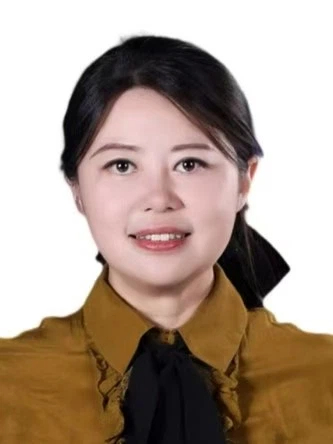 Prof. Yang Zhao
Yunnan Normal University, China
Zhao Yang, Professor at Yunnan Normal University. Her
research areas include AI in Education, Learning Analytics,
Pattern Recognition, and Intelligent Systems. She has
presided over 9 national, provincial, and ministerial-level
research projects and participated in more than 10 projects
supported by the National Natural Science Foundation of
China (NSFC) and the National Social Science Fund of China
(NSSFC). She has published over 30 papers, authored one
sole-authored monograph, co-authored six others, and edited
two textbooks while co-editing three more. She holds 15
registered software copyrights.
Professor Zhao has received a National Third Prize in the
Teaching Innovation Contest for Higher Education Teachers,
as well as the Grand Prize (Top Prize) for the Senior
Professional Rank Group at the provincial level in Yunnan.
She also won a National Third Prize in the Smart Course
Design Competition. She has presided over one Technology
Innovation Project for Small and Medium Enterprises of the
Yunnan Provincial Department of Science and Technology. In
provincial and national innovation and entrepreneurship
competitions, she has earned one National Bronze Award, two
Provincial Gold Awards, six Provincial Silver Awards, and
four Provincial Bronze Awards. Additionally, she has been
honored with the Outstanding Entrepreneurship Award from the
United Front Work Department of Yunnan Provincial Committee
and recognized as an Outstanding Entrepreneurship Mentor.
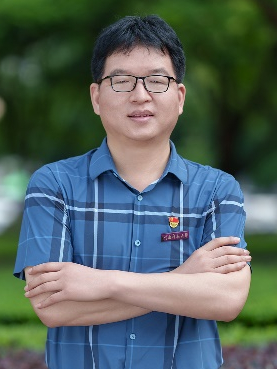 Prof. Wenzheng Yang
Yunnan Normal University, China
Yang Wenzheng, Ph.D. (Postdoctoral), graduated from Central
China Normal University with a Ph.D. in Educational
Technology, is a Professor at Yunnan Normal University. He
has presided over 2 projects of the National Natural Science
Foundation of China (NSFC), one Special Fund and one General
Fund of the China Postdoctoral Science Foundation, one
project of the National Education Science Planning Program,
and 3 provincial and ministerial-level projects. As a core
member, he has participated in 5 projects including key
projects of NSFC and the National Social Science Fund of
China (NSSFC). He has published over 50 papers in core
journals such as Educational Research, China Educational
Technology, and Educational Technology Research. He has
independently authored one academic monograph and
co-authored three others. He has been granted 2 national
invention patents. He has been honored with the title of
“Advanced Individual in ‘Three Educations’ (Educating,
Cultivating, and Caring for Students)”. His research areas
include AI applications in education, development and
application of digital educational resources, and
interdisciplinary thematic teaching.