
Special Session 6
Generative AI-Empowered Visual Instructional Design: From Multimodal Resource Generation to Educational Agent Collaboration
Description
In current K-12 and higher education practices, complex
scientific mechanisms and abstract humanistic concepts often
present significant cognitive hurdles for students. The
proliferation of Generative Artificial Intelligence
(particularly cross-modal image generation and Large
Language Models) provides revolutionary tools for
educational visualization. However, current practices
largely remain at a superficial "tool application" level,
lacking systematic instructional-design guidance, dedicated
development of educational AI agents, and deep theoretical
exploration of human-AI collaborative cognitive mechanisms.
This Special Session aims to bridge this research gap by
establishing an academic platform connecting theoretical
researchers and frontline educators. The session will
explore four dimensions: application, technology, theory,
and ethics. It will evaluate the effectiveness of AIGC in
generating multimodal resources (e.g., reconstructing
literary imagery, designing STEM scientific illustrations);
explore interdisciplinary and cross-cultural innovative
teaching models; analyze the reshaping of teachers' roles
within the "Generate-Evaluate-Refine" workflow using TPACK
and Meta-Task Awareness (MTA) frameworks; and proactively
examine ethical challenges such as copyright definition,
scientific hallucinations, and cultural bias in developing
visual digital textbooks. Through this session, we aspire to
propel educational technology from mere "AI assistance"
toward genuine "Human-AI Collaborative Smart Education."
Session organizers
Prof. Hung-Cheng Chen, Huanggang Normal University, China
Dr. Lung Hsiang Wong, Nanyang Technological University, Singapore
The topics of interest include, but are not limited to:
▪ Digital Empowerment in Humanities Education: Applications
of AI in Classical Poetry, Educational Picture Books, and
the Visualization of Classic Literature
▪ Bridging the Abstraction Gap: Scientific Illustration and
Infographic Design in STEM Education via Generative AI
▪ Education-Oriented Image Design: AI Agent Development and
Human-AI Collaborative Workflows
▪ Cognitive Mechanisms and Theoretical Construction of
GenAI-Empowered Visual Instruction
▪ Interdisciplinary Project-Based Learning and
Cross-Cultural Educational Innovation Based on AIGC Image
Generation
▪ Evolution of Teachers' Digital Literacy in the AI Era:
Visual Instruction and Creative Practice from a Human-AI
Collaborative Perspective
▪ Ethical Challenges in GenAI Educational Visualization:
Scientific Boundaries, Copyright Definition, and Algorithmic
Bias
Submission method
Submit your Full Paper (no less than 5 pages with two
colums) or your paper abstract-without publication (200-400
words) via
Online Submission System, then choose Special
Session 6 (Generative AI-Empowered Visual Instructional Design: From Multimodal Resource Generation to Educational Agent Collaboration)
Template
Download
Introduction of session organizers
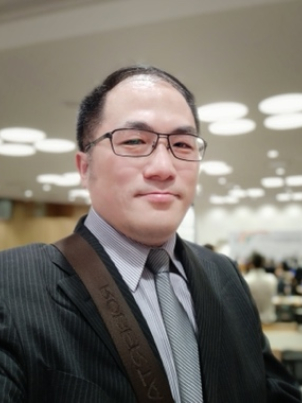 Prof. Hung-Cheng Chen
Huanggang Normal University, China
Dr. Hung-Cheng Chen is a Professor at Huanggang Normal
University and a Visiting Scholar at the National Institute
of Education (NIE), Singapore. He holds a Ph.D. from
National Taiwan University and was formerly a Guest Scholar
at Kyoto University’s DPRI. His interdisciplinary research
bridges tropical cyclone dynamics and educational
technology. Recently, he has pioneered Generative AI
applications in education, including classical poetry
visualization, multimodal Chinese material generation, and
the development of educational AI agents. He also utilizes
AI workflows to optimize scientific communication. In
collaboration with Dr. Lung-Hsiang Wong at NIE, he developed
the MTA-TPACK Dynamic Collaboration Spiral, a framework that
explains the cognitive mechanisms and empirical impact of
human-AI collaboration in scientific educational
visualization.
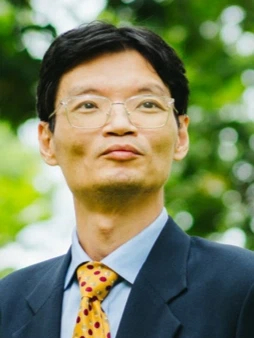 Dr. Lung Hsiang Wong
Nanyang Technological University, Singapore
Dr. Lung Hsiang Wong received his PhD in Computer
Engineering from Nanyang Technological University (NTU),
Singapore. He is currently a Senior Education Research
Scientist at the National Institute of Education, NTU. He
also serves as a Visiting Professor at Universitas Negeri
Malang, Indonesia. Dr. Wong has been engaged in research in
educational technology and the learning sciences for more
than three decades. He is widely known for his work on
mobile and seamless learning, including the highly cited
“Ten Dimensions of Mobile Seamless Learning” framework. His
PhD research focused on Intelligent Tutoring Systems. In
recent years, he has returned to the field of AI in
education and proposed the concept of Meta-Task Awareness
(MTA) based on his extensive experience in university
teaching and professional development for frontline
teachers. MTA emphasizes cultivating learners’ and
educators’ ability to move beyond prompt-engineering skills
toward deeper human–AI collaborative thinking that leverages
complementary strengths between humans and AI. Dr. Wong has
published over 50 SSCI/SCI journal articles. He received the
APSCE Distinguished Researcher Award in 2015 and has been
listed among the world’s top 2% scientists in the Stanford
University–Elsevier global ranking.