
Special Session 11
Learning Sciences and Intelligent Education: Cognitive Engagement, Learning Analytics, and Pedagogical Innovation
Description
Learning sciences and intelligent education are increasingly
shaping the future of teaching, learning, assessment, and
educational innovation. As artificial intelligence, learning
analytics, adaptive technologies, and intelligent learning
environments become more deeply integrated into educational
practice, there is a growing need to understand not only how
these technologies support instruction, but also how they
influence learners’ cognition, motivation, engagement,
self-regulation, and knowledge construction. This special
session focuses on the dynamic relationship between learning
sciences and intelligent education, with particular
attention to how evidence from cognitive, psychological,
technological, and pedagogical research can inform the
design of more effective, cognitively responsive, and
pedagogically meaningful learning environments.
This session welcomes theoretical, empirical, and
practice-oriented studies that examine intelligent education
from interdisciplinary perspectives. Topics may include
AI-supported learning, learning analytics, cognitive
engagement, adaptive learning systems, self-regulated
learning, smart classrooms, teacher-AI collaboration,
digital pedagogy, and the ethical and responsible use of
intelligent technologies in education. By bringing together
scholars, educators, and practitioners, this session aims to
promote deeper dialogue on how learning sciences can guide
intelligent education toward meaningful learning,
pedagogical innovation, educational equity, and sustainable
educational transformation.
Session organizer
Prof. Hang Hu, Southwest University, China
The topics of interest include, but are not limited to:
▪ Artificial intelligence and generative AI in teaching and
learning
▪ Learning sciences approaches to intelligent education
▪ Cognitive engagement, metacognition, and knowledge
construction in digital learning environments
▪ Learning analytics, educational data mining, and
evidence-informed teaching
▪ Adaptive learning systems and personalized learning
pathways
▪ Self-regulated learning, learner agency, and motivation in
intelligent learning environments
▪ Teacher-AI collaboration, digital pedagogy, and
instructional innovation
▪ Ethical, inclusive, and responsible use of intelligent
technologies in education
Submission method
Submit your Full Paper (no less than 5 pages with two
colums) or your paper abstract-without publication (200-400
words) via
Online Submission System, then choose Special
Session 11 (Learning Sciences and Intelligent Education: Cognitive Engagement, Learning Analytics, and Pedagogical Innovation)
Template
Download
Introduction of session organizer
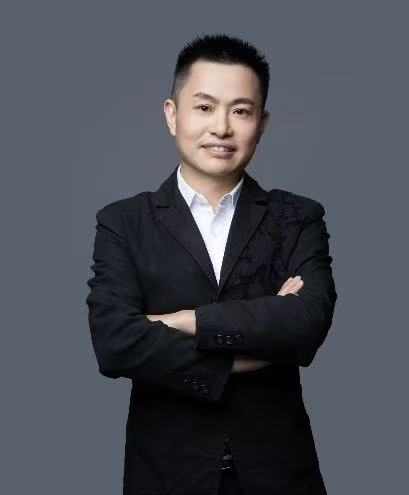 Prof. Hang Hu
Southwest University, China
Hu Hang is a Professor and Doctoral Supervisor (including
postdoctoral supervision). He serves as the Director of the
Institute of Big Science Education; Director of the Research
Office for Technological Civilization and Digital Humanities
and Director of the Chongqing Key Laboratory for Strategic
Development of Civilizational Mutual Learning at the
China-Greece Center for Mutual Learning of Civilizations (a
joint institute for regional and country studies under the
Ministry of Education and a key research base for philosophy
and social sciences in Chongqing); Director of the "Big
Science Education" Virtual Teaching and Research Office
(part of the Ministry of Education’s "Collaborative Quality
Enhancement" initiative led by Southwest University);
Rotating Executive Editor-in-Chief of the journal *Greek
Studies*; Convener of the National (Big Science) Discipline
Education Alliance; and a "Top 1% Highly Cited Scholar" on
CNKI.
He holds positions as an expert for the Ministry of
Education’s National Education Examinations Authority; Vice
Chair of the Information Technology Education Committee
under the Chinese Society of Education; Vice Chair of the
Experimental Teaching Equipment Branch of the China
Educational Equipment Industry Association; Executive
Council Member of the Information Technology Education
Committee under the China Association for Educational
Technology; Council Member of the Learning Sciences Branch
of the China Association of Higher Education; Member of the
Group Standard Expert Committee of the China Educational
Equipment Industry Association; and expert in basic
education quality monitoring and social science
popularization for Chongqing Municipality.
He has presided over more than 20 projects at the national,
provincial/ministerial, and university levels. He has
published over 80 papers in journals indexed by SCI, SSCI,
and CSSCI, and authored or translated 14 books (including
textbooks). His research output, *Empirical Study on
Technology-Facilitated Deep Learning in Primary School
Mathematics*, won the National Award for Outstanding
Achievements in Empirical Educational Research. He serves on
the editorial boards and as an external reviewer for several
high-level journals. His "Deep Learning and Intelligent
Education" experimental school network spans kindergartens,
primary and secondary schools, vocational education
(secondary and higher levels), and higher education. His
projects cover areas such as reform of assessment mechanisms
for high school and college entrance exams; early
identification and cultivation of top-tier innovative
talent; regional smart education development; intelligent
"Grand Ideological and Political Education" (Big
Ideological-Political Education); comprehensive educational
reform for the New International Land-Sea Trade Corridor;
comprehensive educational reform for the Yangtze River
Economic Belt and the Chengdu-Chongqing Economic Circle; and
mutual learning regarding technological civilization between
China, Greece, and the Mediterranean region.
Key research areas include: deep learning and its
educational applications; science, technology, and
intelligent education; intelligent computing and digital
humanities; and the history and philosophy of science and
technology.